Tundra Copper employs cutting-edge geological exploration techniques to uncover copper deposits, and using results from our surveys to drive a new exploration model.
What We Knew
Historically, workers focused on high grade copper veins and lodes along structures within the Coppermine River Group basalts. Though prevalent, the lodes are too small and discontinuous to be economic in northern Nunavut.
What We Learned
Tundra’s drill campaign and exploration efforts in 2025 focused on the Rae Group sediments overlying the basalts for sedimentary-hosted copper. We learned several important things:
- Faults that host copper mineralization in the basalts also cut the overlying sediments
- These faults also host mineralization in the sediments
- Mineralizing faults are younger than historically thought
- Mineralization is elevated in the sediments near these faults
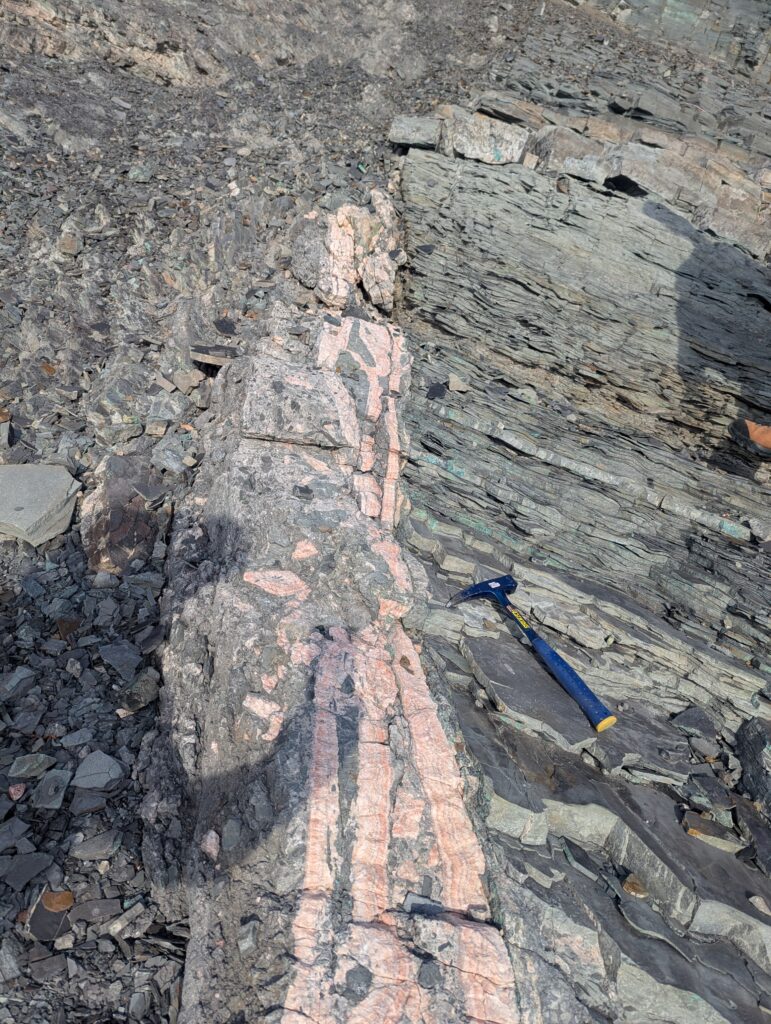
Chalcocite mineralization eriched in siltstones
along faults cutting the Lower Rae Group
Tundra Copper’s Sediments Are An Extremely Large Opportunity
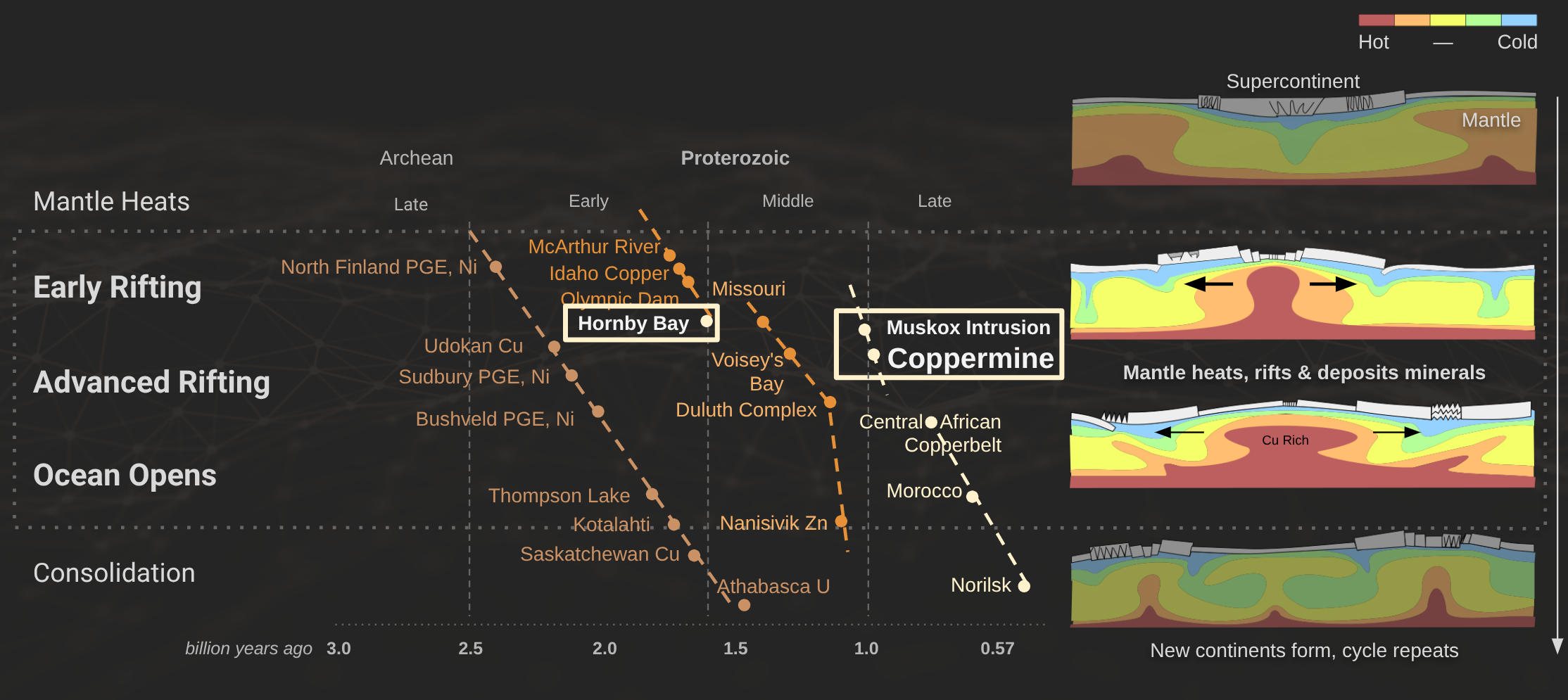
Tundra discovered that the sedimentary rocks act as traps and therefore have the greatest potential for large, economic deposits, enhancing the trajectory of the entire Coppermine region.
The Source of the Fluids are Intrusion-Related
The fluids along the faults were hot. The fluids carried intrusion-related geochemical signatures consistent with a package of Coronation Gabbro sills and dykes that also cut the Rae Group sedimentary rocks.